
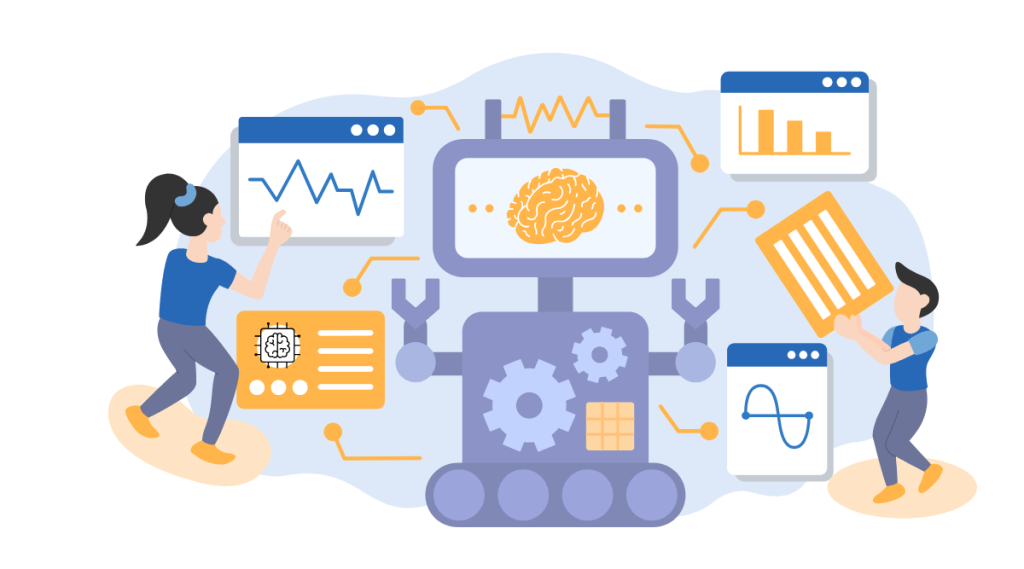
As we step into 2024, the business world is witnessing an unparalleled surge in the adoption of AI technologies. Companies like aibdr.co and floworks.ai, known for their contribution to advancing AI solutions, are revolutionizing how businesses operate. AI tools are no longer just optional tech additions but have become central to shaping business strategies, driving efficiency, and fostering innovation. The term “AI tools for business” is gaining traction as enterprises aim to capitalize on the vast potential of artificial intelligence. So, why is AI crucial for business, and how can companies leverage it to its fullest potential in 2024? This guide unravels the key aspects of AI in business, the top tools, and the future trends you shouldn’t ignore.
The Importance of AI in Business 2024
Understanding AI’s Role in Modern Enterprises
In recent years, AI has transitioned from a niche technology to a fundamental pillar across various industries. Whether it’s automating mundane tasks, providing actionable insights, or crafting personalized customer experiences, AI’s role in modern enterprises is both expansive and critical. By intelligently analyzing data, AI tools can provide businesses with insights that were previously unimaginable, allowing for informed decision-making and strategic planning.
Incorporating AI in business helps in reducing operational costs and improving speed and accuracy. For example, aibdr.co and floworks.ai leverage AI to enhance business processes, thereby allowing companies to focus more on their core competencies. Businesses today find themselves at an advantage with AI because it not only increases productivity but also fosters innovation by handling complex processes with ease.

How AI Is Shaping Business Strategies
AI is not just a tool—it’s a pivotal element in crafting business strategies. Enterprises are using AI to gather insights about market trends, consumer behavior, and even competitor strategies. With AI-driven forecasting, companies can anticipate market shifts, align their strategies accordingly, and maintain a competitive edge.
AI strategies often include predictive analytics, which helps in anticipating customer needs and crafting tailored marketing campaigns. Moreover, the integration of AI in business processes aids in the design and execution of supply chain strategies, optimizing everything from inventory management to logistics. Businesses like floworks.ai are actively demonstrating how AI can strategically position enterprises for success by refining business models and processes.
Emerging Trends in AI for Business
With continuous advancements in AI technologies, several trends are emerging that businesses should not overlook. Trends such as AI-driven cybersecurity, AI in human resources, and AI-focused customer experience tools are garnering significant attention.
The adoption of AI in cybersecurity is proving indispensable in preemptively tackling threats and ensuring data protection. Furthermore, businesses are increasingly deploying AI in HR for tasks like candidate screening and employee performance management. AI’s capability to process vast amounts of data quickly and make predictions form a critical asset in enhancing customer interactions, as they can drive more personalized and efficient service. Understanding these trends allows businesses to stay ahead in a competitive landscape.
Top AI Tools for Business in 2024
AI Tools for Enhancing Productivity
Businesses are constantly on the lookout for ways to increase productivity, and AI tools are pivotal in this quest. These tools help automate routine tasks that previously consumed significant man-hours, allowing human resources to focus on higher-value activities. AI-powered software, such as task management systems and collaborative platforms, streamline workflows and ensure teams work more efficiently.
In addition, AI tools can automate complex data analysis, making it easier for businesses to make quick and informed decisions. Platforms that integrate AI for addressing customer queries or managing project timelines contribute significantly to enhancing overall productivity.
AI Solutions for Marketing and Sales
Marketing and sales are among the most dynamic facets of any business, and AI is making a profound impact in these areas. AI tools aid in understanding customer preferences, predicting purchasing behaviors, and even crafting personalized marketing messages. These solutions enable businesses to reach potential customers more effectively and optimize their sales strategies.
AI in sales also involves tools that can analyze sales calls, automate follow-ups, and provide sales teams with insights that enhance their selling tactics. Companies like aibdr.co are actively involved in developing AI solutions that boost marketing efforts by providing data-driven results and improving customer acquisition methodologies.
AI in Customer Service: Transforming Interactions
The use of AI in customer service is transforming how businesses interact with their clients. Tools like chatbots and virtual assistants can handle customer inquiries 24/7, providing instant responses and resolving issues efficiently. This not only improves customer satisfaction but also reduces the workload on customer service teams.
AI also plays a role in sentiment analysis, helping businesses understand customer feedback and improve their services accordingly. Companies that adopt AI-driven solutions for customer service often see a marked improvement in customer loyalty and engagement.
AI for Data Analysis and Decision Making
Data is the backbone of modern business decision-making, and AI tools are revolutionizing how data is analyzed and utilized. By sifting through massive datasets, AI tools can uncover trends, patterns, and insights that humans might miss. This analytical power helps businesses forecast market changes and make data-informed decisions.
AI for data analysis includes tools that offer real-time analytics, predictive modeling, and reporting. Such solutions are invaluable for businesses seeking to enhance their strategic planning and operational effectiveness. Enterprises that integrate AI for decision-making often find themselves more agile and better equipped to respond to market dynamics.

These discussions set the stage for the successful selection and integration of AI tools in enterprises, leading to enhanced operational efficiency and innovation. As we continue, we will delve deeper into how businesses can choose the right AI tools and learn from real-world applications and case studies. Stay with us as we explore further into the intricacies of AI in business.
Selecting the Best AI Software for Your Enterprise
Factors to Consider When Choosing AI Tools
When selecting AI tools for your business, it’s essential to evaluate several factors to ensure the technology aligns with your specific needs and goals. First, consider the tool’s usability—how intuitive and user-friendly is the software? The training and support provided by the vendor, as well as learning curve considerations, are crucial to your team’s successful adoption.
Next, assess the tool’s scalability. As your business grows, your AI solutions should effortlessly handle increased loads without performance issues. Furthermore, interoperability with existing systems is vital. The AI tool should integrate smoothly with your current software ecosystem to prevent workflow disruptions.
Security is another paramount concern. Ensure the AI tool has robust data protection features and complies with relevant industry regulations to safeguard your sensitive information. Additionally, consider the vendor’s reputation and the tool’s reliability—research reviews and case studies to gauge past performance and customer satisfaction.
Comparing Popular AI Solutions on the Market
In the ever-expanding AI marketplace, comparing different solutions can be overwhelming. Start by identifying a small pool of potential tools based on your needs analysis. Consider features that align with your business objectives, such as automation capabilities for task management, predictive analytics, or customer service enhancements.
For instance, aibdr.co and floworks.ai offer AI solutions tailored for business process optimization and customer engagement improvements. Comparing these with other market players can help you identify which features stand out, such as the depth of data analytics, user interface, customization options, and customer support.
Create a matrix to visualize the comparison—listing tools along with their key features, costs, supported platforms, and unique selling points. This visual aid can simplify decision-making and help identify the best match for your enterprise.
Balancing Cost and Functionality
While it might be tempting to opt for the most feature-rich AI solution, balance is key. Understanding the total cost of ownership, including initial purchase, implementation, training, maintenance, and potential upgrades, will prevent budget overruns.
Evaluate whether the AI tool’s functionality justifies its cost—will it provide a significant return on investment through increased productivity, sales growth, or improved customer satisfaction? Consider starting with a tiered pricing model or a trial period to test the tool’s value before committing long-term.
Businesses like aibdr.co offer competitive pricing structures designed to meet various business needs, ensuring enterprises receive comprehensive AI solutions without excessive expenditure.
Business AI Applications and Case Studies
Real-World Success Stories of AI in Business
Exploring real-world instances where businesses have thrived using AI provides valuable insights for your enterprise. Consider the case where a leading retailer adopted AI-powered inventory management tools. By predicting demand more accurately, they minimized stockouts and overstock situations, enhancing their operational efficiency and customer satisfaction.
Similarly, a financial services firm implemented AI solutions for fraud detection. The speed and accuracy of these tools helped identify and mitigate fraudulent activities more rapidly than traditional methods, saving substantial revenue and reinforcing customer trust.
Learning from Industry Leaders: AI Case Studies
Industry leaders provide a wealth of information on implementing and maximizing AI’s potential. Companies like floworks.ai demonstrate how AI can seamlessly integrate into business models, showcasing examples where their solutions increased efficiency in manufacturing processes or enhanced customer interactions through virtual assistants.
Another example involves a health tech company using AI for predictive patient care. By analyzing patient data, they predicted trends and improved preventative care, thereby reducing health complications and lowering costs.
Studying these cases can inspire innovative applications of AI in your own business and underscore the importance of a strategic approach to technology adoption.
Key Takeaways from Successful AI Deployment
From these case studies, several principles emerge as critical to successful AI deployment. Firstly, it’s evident that alignment with business goals is paramount—AI should directly address existing challenges or enhance current operations to justify its implementation.
Secondly, effective change management throughout the deployment phase is crucial. Educating and involving stakeholders can ensure smoother transitions and faster realization of benefits. Moreover, establishing measurable objectives and regularly reviewing AI performance against these targets enables continual improvement and fine-tuning.
Finally, collaboration with trusted partners who provide ongoing support and expertise can help navigate challenges and foster technological growth within your business.

Implementing AI-Driven Business Strategies
Developing an AI Strategy for Your Business
Creating a robust AI strategy begins with defining clear objectives and desired outcomes. Assess your business’s current challenges and goals to determine where AI can have the most impact. Establish measurable targets to track progress and benefit realization.
Collaboration across departments ensures alignment and comprehensive input, fostering creativity and innovation. Engage stakeholders and experts to develop a step-by-step plan encompassing technology selection, pilot projects, implementation stages, and evaluation metrics.
AI planning should also include a budget forecast and resource allocation, ensuring that the implementation phases are adequately equipped and managed effectively—ultimately paving the way for smooth integration.
Overcoming Challenges in AI Implementation
Implementing AI isn’t without its challenges. Businesses often face hurdles such as data quality issues, integration with existing systems, and resistance to change. To overcome these barriers, start with small, incremental changes rather than a one-time overhaul to gradually ease the transition.
Data readiness is critical. Ensure your data is clean, relevant, and accessible. Implementing good data governance practices can mitigate issues down the line. Encourage a culture of openness and adaptability within the organization to counter resistance and promote enthusiasm for AI-driven projects.
Partnering with AI experts or consultants during the initial phases can provide necessary support, making the implementation process more manageable and successful.
Ensuring a Smooth Transition to AI Technology
To ensure a seamless transition to AI, maintain open lines of communication throughout the implementation process. Keep all stakeholders informed and involved, gathering feedback to address concerns proactively.
Provide comprehensive training sessions, empowering team members to leverage AI technology effectively. Tailoring training to various departments ensures that each department benefits from AI in relevant ways.
Establishing a feedback loop can facilitate early identification and resolution of issues, optimizing AI performance and ensuring user satisfaction. Continuous monitoring and updates based on feedback equip your business to adapt AI tools to meet evolving needs.

The Future of AI in Business Beyond 2024
Predictions for AI Trends and Innovations
As we look beyond 2024, AI’s evolution will continue to expand business horizons. Expect advances in natural language processing, making AI interactions more intuitive and human-like, which will broaden its applications in customer service and HR.
Edge AI, which processes data on devices rather than cloud servers, will see greater adoption due to its ability to ensure lower latency and enhanced privacy. This technology shift could revolutionize real-time applications in supply chain management and the Internet of Things (IoT).
Generative AI models will push creative boundaries by autonomously generating content, designs, and solutions. While this technology is emerging, its widespread use will enhance innovation in fields like marketing, entertainment, and product design.
Preparing Your Business for Upcoming AI Advances
Staying prepared for AI advancements requires a proactive approach. Encourage ongoing professional development and training for your teams to familiarize them with evolving AI concepts and applications.
Engage with AI communities and industry forums to stay updated on trends and share insights. Regularly reviewing your business processes with an AI lens can reveal areas for innovation and integration.
Investing in flexible, scalable AI infrastructure will enable your organization to quickly adapt to new technologies as they emerge, maintaining a competitive edge in the market.
How to Stay Ahead with AI-Driven Innovation
To remain at the forefront of AI innovation, cultivate a culture that embraces change and values creativity. Encourage cross-functional collaboration to explore AI’s potential in various business areas.
Sponsor pilot programs that experiment with emerging AI technologies, harnessing insights to guide strategic decisions. These initiatives can identify new opportunities and maintain your business’s innovative momentum.
Engage with AI thought leaders and tech partners who can provide guidance, resources, and inspiration. Their expertise can lead to breakthroughs that align closely with your company’s objectives and market demand.

In the following sections, we’ll address common questions and concerns businesses may have about integrating AI tools and strategies, ensuring a comprehensive understanding of their implications and benefits. Stay tuned for a deeper dive into FAQs and practical solutions.
Conclusion
As we reflect on “The Ultimate Guide to AI Tools for Business Success in 2024,” it’s clear that artificial intelligence will continue to play a transformative role in shaping how businesses operate and innovate. From enhancing productivity and optimizing marketing strategies to revolutionizing customer interactions and data analysis, AI tools are becoming indispensable assets for any forward-thinking enterprise. Companies like aibdr.co and floworks.ai are at the forefront of this revolution, offering advanced AI solutions that empower businesses to adapt and thrive in an ever-evolving digital landscape.
As you consider integrating AI into your business strategies, remember that choosing the right tools requires a careful evaluation of your organizational needs, budget, and long-term objectives. Real-world applications and industry case studies further underscore the potential of AI to not only improve operational efficiency but also to foster creativity and innovation.
Looking ahead, the horizon of AI in business promises even more advances and opportunities. To stay ahead of the curve, it’s crucial for businesses to remain informed about emerging trends and continually refine their AI strategies. As we embrace this dynamic future, let’s remain committed to leveraging AI thoughtfully and responsibly, ensuring that its immense potential is guided by ethical considerations and human-centered values.
FAQs on AI Tools for Business
What is the best AI tool for small businesses?
Selecting the best AI tool for small businesses depends on specific needs and goals. However, small businesses often benefit from AI tools that offer simple integration and ease of use, such as AI-driven customer service platforms, marketing automation tools, and productivity enhancers like virtual assistants. Platforms by aibdr.co provide a range of scalable solutions tailored to assist small businesses in these areas, helping them compete in the larger market.
How can AI improve my enterprise’s efficiency?
AI enhances enterprise efficiency by automating repetitive tasks, enabling data-driven decision-making, and optimizing resource allocation. For example, AI can analyze large datasets rapidly to provide actionable insights, manage routine queries through chatbots, and personalize customer interactions. The result is streamlined operations, reduced overhead costs, and empowered employees who can focus on strategic activities.
What are the potential risks of AI in business?
While AI offers numerous benefits, potential risks include data privacy concerns, the need for proper data management, and reliance on algorithms that may have biases. Additionally, there is the risk of job displacement for roles heavily dependent on tasks AI can perform. Businesses should implement robust cybersecurity measures, invest in ethical AI practices, and provide reskilling opportunities for employees to mitigate these risks.
How can a business ensure a smooth transition to AI technology?
A smooth transition to AI technology involves careful planning and phased implementation. Businesses should start by defining clear objectives and identifying areas where AI can have the most impact. Employee training and change management are also critical to address resistance and ensure everyone is on the same page. Collaborating with experienced vendors like floworks.ai can provide strategic insights and support for a hassle-free integration process.
Are AI tools expensive, and how can I justify the cost?
AI tool costs vary significantly based on the complexity and features of the solution. While initial investments can be substantial, the long-term benefits often justify the cost through increased efficiency, enhanced customer satisfaction, and competitive advantage. When considering AI, it’s essential to conduct a cost-benefit analysis and evaluate how AI can meet specific business goals, leading to improved performance and profitability in the long run.



 blog.aibdr.co
Leave a comment